QR Code for Business Cards (Digital vCard)
Put a QR code on your card - one scan saves your contact.
A QR code on your business card links to your digital contact card (vCard) or personal landing page. Change jobs, numbers, or social links? Update the destination and every printed card you've ever handed out points to the new info.
Make your business card QR code
Fill in your contact details for a code that saves straight to their phone, or switch to the Link tab to point at your site. The preview updates as you type.
Design & brandingcolors · logo · frames
Center logos use 30% error correction so the code still scans.
Want to edit or track this?
This makes a static code (permanent). Create a free account for dynamic codes you can edit after printing, with scan analytics.
Make it dynamic →Free forever · No watermark · Never expires
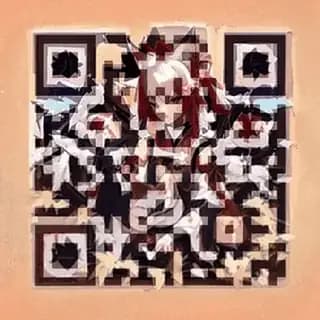
Or make it art. Same code, still scans.
Animated


How to put a QR code on your business card
Two decisions do most of the work: what the code should do when scanned, and how much space you are willing to give it.
- 1
Decide what the scan should do
A contact code (vCard) opens the phone's "add contact" sheet with your details prefilled - the fastest path from handshake to saved number. A link code opens your site, portfolio, or booking page instead. Contact codes win when the goal is being findable later; link codes win when you want them to see something specific.
- 2
Keep the data short
Every field you add makes the pattern denser and harder to read at business-card size. Name, phone, email, company and website is a comfortable set. If you want a photo, a bio, or social links, point the code at a small contact page instead - a QR code cannot hold an image.
- 3
Generate and design it in
Set the colours to match the card, then download the SVG. Give the code its own clear area on the card rather than tucking it into a corner against the trim - the blank margin around the pattern is part of the specification, not padding.
- 4
Consider making it dynamic
Cards outlive job titles. A dynamic code on a printed card can be repointed when your number, title, or employer changes, so the 500 cards already in other people's wallets stay correct.
- 5
Test before the full run
Order a proof, or print one at home at final size, and scan it with more than one phone. Matte stock reads better than gloss under office lighting.
Printing and sizing: business cards
Most QR codes that fail in the wild fail for one of three reasons: printed too small, printed with no quiet zone, or printed with too little contrast. All three are decided before the file reaches the printer.
How big does it need to be?
The working rule is ten to one: a code scans reliably from roughly ten times its own width. A 3 cm code is comfortable at 30 cm - arm’s length. A code on a window meant to be scanned from across the pavement, say 3 metres, needs to be about 30 cm wide. For business cards, 2 cm square is the practical floor. That is the floor for a plain link. A full contact card packs in far more data, so give it 2.5 cm if the layout can spare it, or trim the fields you do not need.
Leave the quiet zone alone
The blank margin around the pattern is not whitespace a designer can reclaim - it is part of the specification. Scanners need at least four modules’ worth of clear space (a module is one of the small squares) to find the code’s edges. Codes downloaded here already include it; the failure mode is a layout that crops it, or artwork that runs right up to the pattern.
Contrast and colour
Dark pattern on a light background, always - inverted codes (light on dark) are read by far fewer scanners. Keep a strong tonal difference rather than merely a colour difference: a mid-grey code on a pale-yellow background can look high-contrast to the eye and near-invisible to a camera. If you brand the code, test the printed proof, not the screen.
File format
Download the SVG for anything going to professional print. It is vector, so it stays perfectly sharp whether it prints at 2 cm or 2 metres, and it will not pick up the soft edges that make a raster code harder to read. PNG is fine for screens, documents, and office printers.
Test the proof, not the file
Before a print run of any size, scan the actual printed proof - in the light the code will live in, from the distance people will stand at, with an older phone if you have one. Laminate and gloss finishes add glare that a PDF preview will never show you.
If the destination might ever change after this goes to print, make it a dynamic code so you can repoint it without reprinting.
Why use a dynamic QR code for this
Never reprint cards again
New title or phone number? Update the link, not the print run.
One scan to save you
Recipients tap once to add your full contact to their phone.
Track networking ROI
See how many people actually scan your card after an event.
How to set it up
- 1
Link the code to your digital contact card or personal site.
- 2
Print it on your business card or add it to your email signature.
- 3
Update your details anytime - the code keeps working.
Before you print it
If your business cards code may ever need to point somewhere else, create it as a dynamic QR code you can edit after printing. The printed pattern never changes; only the destination behind it does. It also means you can track every scan by day, device, and location and see which placement actually worked.
Business cards FAQ
What should the QR code link to?
Either a hosted vCard file, a LinkedIn profile, or a personal landing page with all your links. Dynamic codes let you change this later.
Should the code hold my contact details directly or link to a page?
A vCard code stores your name, phone, and email inside the pattern itself, so it saves the contact without any internet connection, but it can never be changed once printed. A dynamic code links to a page you control, so a new number or a new job title only means editing the destination. If you change roles often, print the dynamic version; if the details are stable and you want offline reliability, use the vCard type.
How big does the code need to be on a standard business card?
Aim for about 2 x 2 cm, since a code scans from roughly ten times its own width and cards are held at arm's length. Keep a clear white margin around all four sides and do not print it over a photo or a dark panel. Download the SVG rather than the PNG so the print shop can scale it without the edges going soft.
Can I tell whether people are actually scanning the card I hand out?
Yes, if the card uses a dynamic code. Every scan is logged with time, rough location, and device, so after an event you can see how many of the cards you handed out were actually scanned and when. Use a separate code for cards you leave in a physical stack versus the ones you hand out in person, and the two scan counts tell you which is worth the print run.
Can I edit the link after it's printed?
With a dynamic code, yes. It encodes a short redirect you control, so you change the destination in your dashboard and every copy already in the wild follows - no reprint.
General questions about how QR codes work, what they cost and how to print them are answered on the QR code FAQ.
Ready to create your business cards code?
Free to start. Make it dynamic to edit anytime and track every scan.
Get started freeRelated use cases
More business & professional guides.